A woman holding up a toothbrush with a smile on her face, set against a brick wall background.

Invisalign®

Invisalign® offers a modern approach to straightening teeth that many patients find appealing: it combines invisible aligners, digital planning, and a clear progression from consultation to finished results. The following sections explain how the system works, what it can achieve, and what to expect during treatment — presented in straightforward, practical terms so you can decide whether a conversation with our team is the right next step. Centreville Dental Design brings experienced clinical oversight to each case, pairing proven technology with thoughtful, patient-centered care.

How the system plans and moves your teeth

At the center of clear aligner therapy is detailed digital planning. Your clinician begins by creating an accurate three-dimensional record of your teeth and bite using intraoral scanning or high-resolution impressions. That dataset lets the team visualize current tooth positions and design the full sequence of movements needed to achieve the target alignment.

From that digital blueprint, a series of custom aligners is fabricated. Each aligner represents a small, calculated step in the treatment plan; by wearing each tray for the prescribed period, teeth shift incrementally into the intended positions. This graduated approach provides measurable control over tooth movement and allows the clinician to plan predictable changes over the course of care.

Because the process is planned in advance, clinicians can preview the projected outcome and make refinements before fabrication begins. That planning phase is important: it clarifies treatment objectives, determines whether auxiliary techniques (like attachments or interproximal reduction) are needed, and sets realistic expectations for timing and clinical oversight.

Everyday advantages of clear aligners

One practical benefit of clear aligners is discretion. The aligners are made from transparent materials that sit close to the tooth surface, making them far less noticeable than metal brackets and wires. For patients who prioritize a low-visibility option, aligners often provide an appealing balance between aesthetics and function.

Removability is another commonly appreciated feature. Aligners are taken out for eating, brushing, and flossing, which lets patients maintain normal oral hygiene routines without navigating around fixed appliances. For many people this reduces the risk of plaque accumulation and makes dental care simpler throughout treatment.

Comfort and convenience are also considerations. Smooth aligner surfaces and the absence of protruding brackets can reduce soft-tissue irritation, while the digital workflow shortens the number of adjustments needed in some visits. That said, predictable results depend on patient commitment to the recommended wear schedule and routine checkups with the clinician.

Personalized planning: technology and customization

Digital tools create a tailored treatment path

Modern aligner systems rely on high-resolution scanning and computer-aided treatment simulation. Those tools enable your provider to map each tooth’s trajectory, anticipate how the bite will settle, and identify potential complications in advance. The result is a treatment sequence designed specifically for your mouth rather than a one-size-fits-all approach.

Customization can include targeted features such as tooth-colored attachments that provide extra grip, precision cuts for elastic placement when necessary, and planned refinements if minor additional movement is required later. These options broaden the scope of what aligners can accomplish while preserving a conservative approach that focuses on tooth movement rather than more invasive procedures.

During the planning stage you’ll often receive a visual preview that demonstrates the projected progression of your smile. Reviewing that plan with your clinician helps ensure mutual understanding of goals, timelines, and the clinical steps involved.

What to expect during active treatment

Initial visits typically focus on assessment, documentation, and establishing a clear plan. After records are taken, the aligner series is produced and you’ll receive instructions about wear time, cleaning, and handling. Most clinicians recommend a daily wear schedule that maximizes predictable movement while allowing short, scheduled breaks for meals or important events.

Follow-up appointments are part of the process; they allow the clinician to verify progress, fit new aligners when appropriate, and make any refinements. These check-ins are also opportunities to address concerns about fit, comfort, or oral health maintenance so that treatment stays on track.

Good oral hygiene and adherence to the prescribed wear schedule are essential for predictable results. Keeping regular dental cleanings and checkups during aligner therapy helps prevent the development of gum inflammation or decay that could compromise overall outcomes.

Guidance on candidacy and clinical limits

Clear aligners are effective for a broad range of alignment issues, including crowding, spacing, and many bite irregularities. That said, not every case is ideal for aligner-only treatment; some complex skeletal discrepancies, severe rotations, or movement requirements may call for adjunctive orthodontic methods or interdisciplinary care.

Clinical assessment is the best way to determine candidacy. Your provider will evaluate tooth and jaw relationships, facial proportions, and any previous dental work that could influence the approach. Imaging and diagnostic records — often including digital scans and radiographs — inform that evaluation so treatment recommendations are clinically sound.

When aligner therapy is appropriate, the goal is a stable, functional outcome that enhances both oral health and smile aesthetics. If additional procedures (for example, restorative adjustments or periodontal care) are advisable, these will be coordinated with the aligner plan to support a comprehensive result.

Remember to review the visual resources and procedural overviews below. They are intended as educational material to help you understand the clinical steps involved — from planning to finishing — and to illustrate how aligner therapy is implemented in a dental practice setting.

A medical professional holding a tablet with an X-ray displayed while showing it to two patients in a waiting room setting.

Schedule a comprehensive consultation

A consultation begins with a clinical exam and a review of your dental history and goals. The clinician will explain the aligner workflow, take the necessary records, and discuss whether aligner therapy is an appropriate choice for your specific needs.

A man and woman are engaged in a medical consultation, with the man standing behind the seated woman who is pointing at something on a computer screen.

Fast, precise digital scanning and planning

Digital scanning provides a detailed map of your teeth and bite. Using that scan, your provider creates a step-by-step treatment plan and can often show a visual preview of expected changes before aligners are produced.

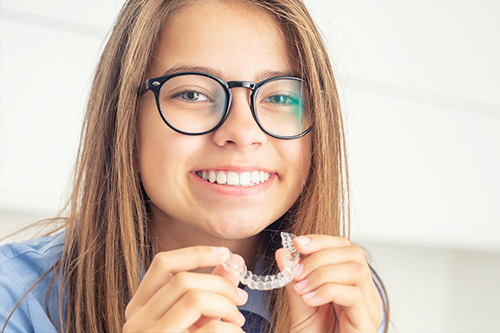
Girl with braces smiling at camera.

Custom fabrication and clinical verification

Aligners are manufactured to match the digital plan, then fitted and verified in the office. The clinician will review wear instructions and demonstrate how to insert and remove trays, as well as how to clean them properly to maintain hygiene.

The image features a smiling woman holding a hand up to her face with a playful expression, standing against a brick wall background.

Ongoing care and finishing touches

Throughout treatment you’ll come in for periodic checks so the clinician can confirm progress and provide any necessary refinements. At the conclusion of active movement, retainers and a maintenance plan help preserve the results over time.

Educational video library and procedure overviews

Short, clinician-focused videos demonstrate case workflows, treatment milestones, and real-world examples of how aligner systems are used in practice.

Invisalign® is a clinically established option for many patients seeking alignment without traditional braces. If you’d like to explore how aligner therapy might fit with your oral-health priorities and lifestyle, our team at Centreville Dental Design is available to review your records and answer questions. Contact us to arrange a consultation and learn more about the steps involved.

*Invisalign® is a registered trademark of Align Technology, Inc.

Frequently Asked Questions

What is Invisalign?

+

Invisalign is a clear aligner system that straightens teeth using a series of custom, removable trays formed from transparent, medical-grade plastic.

Treatment begins with a precise digital scan or impressions that create a three-dimensional model of your teeth and bite, and specialized software plans a sequence of controlled movements. The trays are changed at regular intervals so teeth move incrementally according to the digital plan, offering an alternative to traditional fixed braces for many patients.

How does Invisalign move teeth?

+

Aligners apply gentle, continuous force to specific tooth surfaces so each tray advances the treatment by a small, calculated increment. The shape and staging of each tray are programmed during digital planning to guide teeth along the intended trajectory.

When additional control is needed, clinicians may incorporate tooth-colored attachments, elastics, or precision cuts to direct forces more effectively. Periodic clinical reviews confirm that movements are progressing as planned and allow for adjustments or refinements when necessary.

Who is a good candidate for Invisalign?

+

Many adults and compliant teenagers with crowding, spacing, or a range of bite irregularities are good candidates for clear aligner therapy. Success depends on case complexity, dental and periodontal health, and the patient’s willingness to follow wear and hygiene instructions.

Some severe skeletal discrepancies or highly complex tooth movements may be better managed with alternative orthodontic or interdisciplinary approaches, which a clinician will identify during a diagnostic evaluation. A comprehensive exam with digital scans and radiographs is the best way to determine whether aligners are appropriate for an individual case.

What does the treatment process and timeline look like?

+

The treatment process typically begins with a consultation, clinical exam, and digital records such as intraoral scans and radiographs, followed by a customized digital treatment plan and fabrication of the aligner series. Initial visits focus on documentation and education about wear time, aligner handling, and hygiene to set expectations for the course of care.

Treatment duration varies with case complexity; many patients complete active movement within several months to a year or longer for more involved cases. Regular checkups allow the clinician to monitor progress and request refinements if small additional movements are needed to achieve the planned outcome at Centreville Dental Design.

How should I care for my aligners and teeth during treatment?

+

Remove aligners for eating and drinking anything other than plain water, then brush and floss before reinserting them to reduce the risk of decay and gum inflammation. Clean aligners daily with a soft toothbrush and lukewarm water or a manufacturer-recommended cleanser, and never use hot water, which can distort the trays.

Maintain regular professional dental cleanings and exams while undergoing aligner therapy to catch and manage any oral-health issues promptly. Store aligners in their case when not in use to prevent loss or damage and follow the clinician’s instructions for wear time to keep treatment on schedule.

Will I need attachments or other auxiliary treatments?

+

Attachments are small, tooth-colored shapes bonded to teeth to give aligners better grip for specific movements, and they are commonly used when needed to improve control. Clinicians may also plan interproximal reduction (IPR) to create space, elastic wear for bite correction, or precision cuts for auxiliaries when the digital plan indicates those adjuncts will help achieve the goals.

These auxiliary measures are determined during the planning phase and are typically reversible or conservative in nature. Your provider will explain why any additional techniques are recommended and how they support predictable tooth movement throughout treatment.

How often will I need to see the dentist during Invisalign treatment?

+

Follow-up appointments are scheduled regularly to verify fit, check progress, and provide new aligners or adjustments as needed, with timing that commonly ranges from every four to ten weeks depending on the case. These visits ensure tooth movement matches the planned sequence and give the clinician a chance to manage any issues early.

Some practices provide multiple aligners at once and use longer intervals between in-person checks, while others prefer shorter review cycles; your clinician will recommend a cadence that balances oversight with convenience. Contact your dental team promptly if you experience fit problems, persistent pain, or appliance issues that require attention between scheduled visits.

What side effects or discomfort should I expect and how are they managed?

+

Mild discomfort or tooth sensitivity is common for a few days after inserting a new aligner as teeth begin to move, and some patients notice temporary changes in speech or increased saliva during the adjustment period. Small areas of soft-tissue irritation can occur if attachments or tray edges rub, but these issues are generally manageable and tend to improve as you adapt to the appliances.

Over-the-counter pain relievers, short chew exercises to seat trays, and topical relief or orthodontic wax for any sore spots usually provide effective symptom control. If pain is severe or persistent, or if there are signs of infection or significant oral-health changes, contact the clinician for evaluation and care recommendations.

How are treatment outcomes verified and how are results maintained after treatment?

+

Clinicians verify outcomes with clinical exams, final scans or impressions, and occlusal checks to confirm that the planned tooth positions and bite relationships have been achieved. If small discrepancies remain, a short phase of refinement with additional aligners may be prescribed to fine-tune the result and ensure stability.

Retention is essential after active movement; most patients receive a retainer plan that can include bonded or removable retainers to hold teeth in their new positions. Long-term retention protocols vary by case, so continuing periodic dental checkups and following the retention schedule recommended by your clinician help preserve the outcome over time.

How do I begin an Invisalign consultation at Centreville Dental Design?

+

To start, call the new-patient number at (703) 202-2036 to request a consultation and provide brief background about your dental history and goals. At the appointment the clinician will perform an exam, review records, take digital scans or impressions, and discuss whether clear aligner therapy is an appropriate option for your needs.

The consultation includes a review of the proposed treatment sequence, any recommended adjunctive procedures, and what to expect during active care and retention, allowing you to make an informed decision about next steps. If you choose to proceed, the practice will schedule the necessary records and planning appointments to begin a tailored treatment plan.

Schedule a visit today!
Contact Us
SMS Consent
Submit

Thank You!

We appreciate you taking the time to visit our site. We'll review your message and be in touch with you soon.

Continue
The image shows an interior view of a well-lit lobby area with modern decor, including a floral arrangement on the counter, a reception desk, and a hallway leading to multiple doors with signage.